
The Database Research Cluster (DBRC) is a computing infrastructure for experimental and data-intensive research. It provides configurable virtualized computing environments, access to multi-core bare-metal systems with large amounts of main memory, high-speed networking, and graphics processing units (GPUs). The infrastructure is complemented by excellent technical support for research projects and services. The DBRC is exclusively operated by the Database Research Group at the University of Salzburg and is an official core facility of the research infrastructure in Austria.
Opening Event
We introduce the computing infrastructure of the Database Research Cluster to the public on Thursday, 05 November 2026, 14:00 - 16:00, Lecture Hall I - Christian Doppler, Jakob-Haringer-Straße 2A, 5020 Salzburg. This includes a presentation of typical usage scenarios, showcasing examples of applications in the Digital Humanities, and providing information on how to use the infrastructure.
Researchers across all faculties and disciplines are warmly invited to join us!
After the presentation, there will be a get together with refreshments and the opportunity for further discussions.
You can also join us online via Microsoft Teams and the corresponding Flyer can be found here.
At a Glance
| Capability | Outline |
|---|---|
| Virtualized Environments | Virtual machines (VMs) and containers for research projects and services |
| High-Performance Computing | Multi-core, large-memory systems; either bare-metal or virtualized |
| Distributed Computing | Environments for experiments involving multiple machines |
| High-Speed, Low-Latency Networking | Direct access to Infiniband/RDMA-capable networking hardware |
| Technical Support | Excellent technical support on all levels of the hard- and software stack |
Inquiries
As a starting point, tell us about your research project, your intended experiments, or the services you would like to host at the DBRC. You do not need to know all the details on your technical configuration and we are happy to support you to identify suitable resources based on your needs.
The preferred way to reach us is via email to: dbrc@plus.ac.at
For general and research-related inquiries, you can also contact Daniel Kocher, who is the operational lead of the DBRC. Excellent low-level technical support is provided by Alfred Egger, the co-designer and technician of the DBRC.
Directors
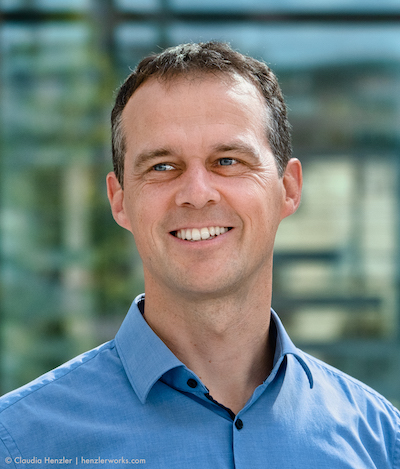
The DBRC is chaired by Nikolaus Augsten, as director and Martin Schäler as deputy director, who are both co-designers of the available infrastructure. Both are responsible for the strategic development and sustainability of the DBRC.
Submit Your Request
Below, we outline the information you must provide to request resources at the DBRC. Please send an email with this information directly to dbrc@plus.ac.at and we will get back to you shortly.
Administrative Information
In any case, we need the following administrative information from you:
- Your full name
- Your affiliation:
- Your research institution
- Your department (if applicable)
- Your research or working group (if applicable)
- Your official email within your institution (private emails only in exceptions)
- A short outline of the project you would like to use our infrastructure for (1 paragraph)
- The funding source of the project (e.g., global budget, third-party funding, industrial collaboration)
Technical Information
If you already know the technical requirements for your needs, please kindly provide the following additional information:
- The type of machine you need (i.e., bare-metal or virtual machine)
- Resources you would like to have on your machine (i.e., CPU, main memory, storage)
- Whether you need one (or more) GPU(s)
- Whether you need access to Infiniband network
Default Machine Configuration
In the following, we provide a default configuration for a virtual machine (VM), which can simply be requested as such:
| (Virtual) CPU Cores: | 8 |
| Main Memory (RAM): | 16 GB |
| (Persistent) Storage (HDD): | 80 GB |
| (Virtual) GPUs: | 0 GB |
| Network: | 10 Gbit/s Ethernet |
Technical Welcome Package
After your request has been approved, you will receive an email to confirm your request and some information about the next steps.
For a head start, we provide a boilerplate for the usage of Ansible within our infrastructure. All users of our infrastructure are required to automate their setup using Ansible in order to get reproducibility by design. This for your own good and particularly important in the rare event of a machine failure or unexpected shutdown (e.g., due to a critical security update).
Features of the Ansible Boilerplate
We provide a file hosts.ini, where the facts about your (virtual) machine are stored in the INI syntax.
This is called an inventory file and may contain facts on multiple remote (virtual) machines.
Furthermore, we provide a file playbook-mwe.yml that contains tasks to be remotely executed on your (virtual) machine.
This is called an playbook file and may contain, in general, consists of any tasks that you would like to execute on your remote (virtual) machine.
The playbook file can use/reference the facts that are defined in the inventory file, i.e., one playbook file can also execute tasks on multiple remote (virtual) machines (if required).
Specifically, our playbook boilerplate provides the following exemplary tasks (based on our daily usage):
- Establishing a remote connection via SSH to your (virtual) machine.
- Pulling the code from a remote repository on your (virtual) machine.
- Compiling a small example C++ code from the remote repository on your (virtual) machine.
- Running a small experiment on your (virtual) machine.
- Copying the experimental results from your (virtual) machine to your local machine.
Infrastructure
Overall, the DBRC consists of 35 physical server systems and we list the most relevant machines for research below.
Virtual Machine Hosts
We run 8 identical physical servers and one additional, more powerful physical server. These machines serve as hosts for virtual machine (VM) and are called VM hosts. The VM hosts are managed via Proxmox VE, are connected via 2x200Gbit/s Infiniband network interconnects, and share a very large Ceph storage with 3x redundancy and an overall net storage of 150 TB. Virtual machines can be requested and are hosted on one of these VM hosts. Note that any virtual machine is naturally limited by the specification of a single VM host.
Specifications:
8 VM hosts are identically configured as follows:
| Component | Specification |
|---|---|
| Server | Supermicro 2HE Server |
| Processor(s) | 2x AMD Epyc CPUs with 16 physical cores (32 threads) |
| Main Memory (RAM) | 2 TB |
| Storage | 4x4 TB + 4x12 TB HDD |
| Network | 4x10 Gbit/s Ethernet + 2x200 Gbit/s Infiniband |
| Operating System (OS) | Proxmox VE 9 |
In addition, there exists one more powerful VM host that is configured as follows:
| Component | Specification |
|---|---|
| Server | Supermicro 2HE Server |
| Processor(s) | 2x AMD Epyc CPUs with 64 physical cores (128 threads) |
| Main Memory (RAM) | 4 TB |
| Storage | 4x4 TB + 4x12 TB HDD |
| Network | 4x10 Gbit/s Ethernet + 2x200 Gbit/s Infiniband |
| Operating System (OS) | Proxmox VE 9 |
High-Performance Servers
We run two clusters of high-performance servers for which exclusive bare-metal access can be requested, i.e., you are the only user that accesses the physical resources of such a machine. These servers can be utilized to execute performance experiments or other tests that should not be influenced by services of other users.
R&D Cluster
Our R&D Cluster consists of 10 identical physical machines for which exclusive bare-metal access can be requested, e.g., to conduct experiments on native hardware.
Specification R&D:
| Component | Specification |
|---|---|
| Server | Supermicro 1HE Server |
| Processor(s) | 1x AMD Epyc 9345P 3.75 GHz CPUs with 32 physical cores (64 threads; 1 NUMA node) |
| Main Memory (RAM) | 12x32 GB = 384 GB |
| Storage | 2x1.75 TB = 3.5 TB NVMe SSD |
| Network | 1x10 Gbit/s + 2x200 Gbit/s NDR Infiniband via a NVIDIA ConnectX-7 NIC |
| Operating System (OS) | Debian Linux 13 |
Established Cluster
Our Esytablished Cluster consists of 10 physical machines, where 5 physical machines are identical, respectively. We refer to the specification below for more details: Five machines follow Specification E1 and the five other machines follow Specification E2. Also for the Esytablished Cluster, exclusive bare-metal access can be requested, e.g., to conduct experiments on native hardware.
Specification E1 (Five Machines):
| Component | Specification |
|---|---|
| Server | Supermicro SYS-6018U-TRT+ |
| Processor(s) | 2x Intel Xeon E5-2630 v3 2.40 GHz CPUs with 16 physical cores (32 threads; 2 NUMA nodes) |
| Main Memory (RAM) | 8x12 GB = 96 GB |
| Storage | 2x2 TB = 4 TB HDD |
| Network | 1x10 Gbit/s + 1x56Gbit/s FDR Infiniband via a Mellanox ConnectX-3 NIC |
| Operating System (OS) | Debian Linux 13 |
Specification E2 (Five Machines):
| Component | Specification |
|---|---|
| Server | Supermicro SYS-6018U-TRT+ |
| Processor(s) | 2x Intel Xeon E5-2603 v4 1.70 GHz CPUs with 12 physical cores (24 threads; 2 NUMA nodes) |
| Main Memory (RAM) | 8x12 GB = 96 GB |
| Storage | 2x2 TB = 4 TB HDD |
| Network | 1x10 Gbit/s + 1x56Gbit/s FDR Infiniband via a Mellanox ConnectX-3 NIC |
| Operating System (OS) | Debian Linux 13 |
Backup Servers
We run two identical physical machines to backup data, one on-site and one off-site backup server managed via Proxmox.
Specification:
| Component | Specification |
|---|---|
| Server | Supermicro 2HE Server |
| Processor(s) | 2x AMD Epyc CPUs with 16 physical cores (32 threads) |
| Main Memory (RAM) | 256 GB |
| Storage | 8x12 TB = 96 TB HDD |
| Network | 1x10 Gbit/s |
| Operating System (OS) | Proxmox Backup Server 4.2 |
Software Infrastructure
Extensive automation of all components of the software stack using Ansible as well as other open-source tools like cloud-init and FAI (Fully Automated Installation). This includes fully automated provisioning of virtual machines (VMs) and physical and configuration management.
We host a Gitlab instance with a fully integrated continuous integration and continuous deployment (CI/CD) in order to build and test code and software. Our Gitlab instance also simplifies the management of large research data files using Git’s Large File Storage (LFS). This facilitates a reliable and reproducible versioning and tracing of research data, code, and experimental setups.
Security and Monitoring
We run two routers with firewalls using OpnSense. These routers are connected via a 4x10 Gbit/s = 40 Gibt/s Uplink to Aconet and facilitate our high-availability setup using network segments and different subnets. In addition, we run an OpenVPN server and all remote accesses to our infrastructure require an active VPN connection provided by us (not to be confused with the university VPN).
We implement multiple services to provide a reliable and secure infrastructure. This includes:
- a Bitwarden password manager
- a 2-factor-authentication (2FA) for important services like Gitlab
- an end-to-end-encryption (E2EE) for highly confidential data using Cryptomator
Furthermore, we continuously use transport encryption such as HTTPS and SSH, and an SSH login is only possible using SSH keys or Kerberos. NFS shares and backups are encrypted, and a host-based intrusion detection systems (HIDS) is permanently active to detect anomalies.
All VMs, hosts, switches, USVs, and databases are monitored using Zabbix, and log files over the entire infrastructure are managed using Graylog.
Cite Us
If you are using the infrastructure of our core facility for conducting your research, please cite us in your papers and repositories (e.g., on Github), and reference our core facility in your research management tool (e.g., Pure in case at the University of Salzburg).
There are multiple complementary ways to cite us, and we require any user of our infrastructure to go through the following list and follow the corresponding instructions:
Publications and Repositories
Please copy the string below into the acknowledgments of your publications (and extensions thereof) and (all) your repositories.
This research was funded in whole or in part by the Database Research Cluster at the University of Salzburg, core facility (CF) 3914 of the Austrian Federal Ministry of Women, Science, and Research (https://forschungsinfrastruktur.bmfwf.gv.at/en/fi/_3914).
Services and Applications by Us
Please copy the string below into your service/application such that it is visible to the user of the service/application.
[Name of the service/application] is powered by the Database Research Cluster at the University of Salzburg, core facility (CF) 3914 of the Austrian Federal Ministry of Women, Science, and Research (https://forschungsinfrastruktur.bmfwf.gv.at/en/fi/_3914).
Reference Us in PURE
Please reference our core facility named “Database Research Cluster” in the PURE entries of your projects/publications/et cetera, which use our research infrastructure (more details below). In most PURE entries, there exists an item called “Research Infrastructure” (almost at the end of the entry). If you then search for “Database Research Cluster”, you will find our core facility that can be referenced.
About Us and Contact
The preferred way to reach us is via email to: dbrc@plus.ac.at
Directors
Operational Lead
